
Vitamin C (L-ascorbic acid)
Vietnamese version: frigate.vn/atlas/bai/vitamin-c
Vitamin C is the most familiar antioxidant active in skincare, and most users know it for two things: brightening the skin and fighting aging. Vitamin C and retinol are the two most essential actives in a skincare routine.
Behind those two familiar effects are five specific actions: building the collagen framework that keeps skin firm and rejuvenated, preventing melanin from forming so skin tone becomes more even, helping the epidermis produce the lipid barrier that holds in water, helping inflammation resolve quickly instead of dragging on, and boosting the effectiveness of sunscreen.
All five actions come from a single property: vitamin C gives up electrons very easily. That same property also makes vitamin C very unstable and very easily degraded in a formula.
So when advising clients, the most important concern turns out to be choosing a reliable vitamin C product to use. This lesson explains the mechanism behind each action, then shows how to tell whether a bottle of vitamin C is still usable and how to instruct clients to use it correctly.
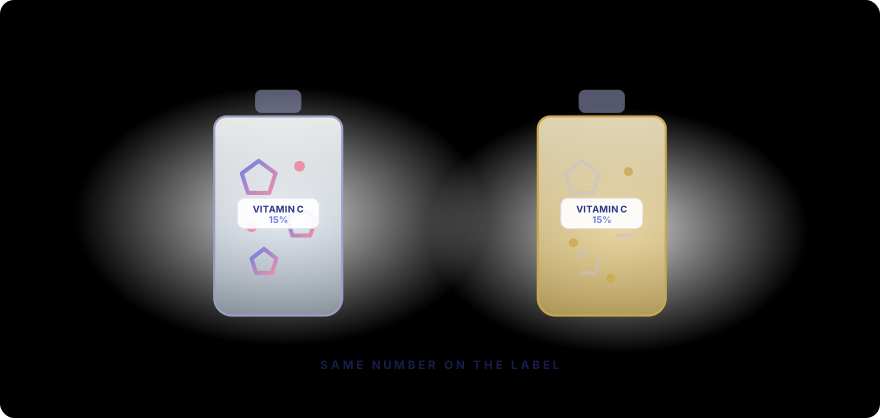
Two bottles, same label, different vitamin C left
1 · What vitamin C is
Vitamin C is a small, water-soluble molecule that the human body cannot make on its own. Its biologically active form is L-ascorbic acid, which appears on ingredient lists as Ascorbic Acid or L-Ascorbic Acid.
Everything about vitamin C comes down to one trait: it gives up electrons very easily. That is why it can do so much on the skin, and also why it breaks down so easily in a cosmetic formula.
At neutral pH, the vitamin C molecule carries an electric charge, so the stratum corneum pushes it back out:
"Vitamin C, as a water-soluble and charged molecule, is repelled by the physical barrier of the terminally differentiated epidermal cells."
(Pullar et al., Nutrients, 2017, PMID 28805671)
For this reason, the pure form needs a low-pH formula both to stay stable and to get into the skin. That is why vitamin C serums usually sit at around pH 3:
"L-ascorbic acid must be formulated at pH levels less than 3.5 to enter the skin."
(Pinnell et al., Dermatologic Surgery, 2001, PMID 11207686)
Besides the pure form, there are also more stable derivatives. The four you will see most often on labels are Sodium Ascorbyl Phosphate, Magnesium Ascorbyl Phosphate, 3-O-Ethyl Ascorbic Acid and Tetrahexyldecyl Ascorbate. Lesson 2 showed that the percentage of a derivative cannot be converted one-to-one into a percentage of L-ascorbic acid. Section 4.3 of this lesson comes back to the derivatives and looks at how stable they are in the bottle.
📖 Terms in this section
- Electron: a negatively charged particle that orbits the nucleus of an atom. When vitamin C gives up an electron, vitamin C is oxidized, and the molecule that receives the electron is reduced, meaning it returns to its normal state. A substance that gives up electrons in this way is called a reducing agent (an antioxidant).
- L-ascorbic acid: pure vitamin C, the form the skin can use directly.
- Stratum corneum: the outermost layer of the skin, made of dead corneocytes stacked on top of one another. It is the main barrier to anything applied to the skin.
- Differentiation: the process by which keratinocytes gradually mature as they move from the basal layer up to the skin surface.
- Derivative: a vitamin C molecule with an extra chemical group attached to make it more stable. Sodium Ascorbyl Phosphate and Magnesium Ascorbyl Phosphate carry a phosphate group, 3-O-Ethyl Ascorbic Acid carries an ethyl group, and Tetrahexyldecyl Ascorbate carries four fatty chains, which makes it oil-soluble.
2 · How it works on the skin
2.1 · Vitamin C's versatility comes from one thing alone: donating electrons to other molecules
| Vitamin C donates electrons to | What you see on the skin |
|---|---|
| Collagen-finishing enzymes | firmer skin at its foundation, shallower wrinkles |
| Dopaquinone, a link in the pigment-production chain | more even skin tone, dark marks gradually fade |
| Vitamin E (Tocopherol) that has been used up | the skin's protective layer recovers instead of running down over the day |
| Free radicals | less damage after sun exposure |
What all four have in common: vitamin C is not an active that supplies nutrients to the skin; it is an active that supplies electrons to the skin. Vitamin C repairs the skin at the molecular level, not the cellular level, which is why it is an extremely special active.
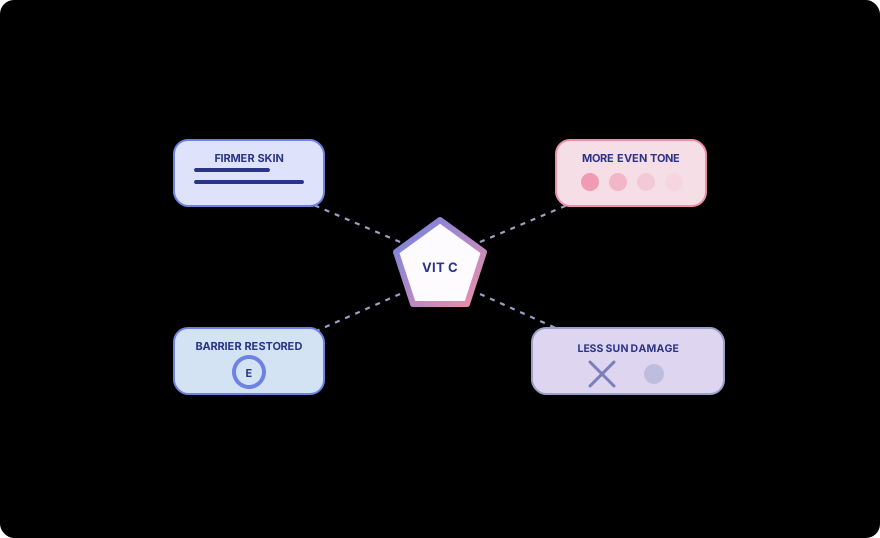
Vitamin C donates electrons to four targets
Lesson 3 placed vitamin C in the group of substances that are used up as they work, meaning it has to be present in a sufficient amount to do enough work. The next part shows what that depletion means for everyday use.
2.2 · The skin keeps vitamin C in a reservoir to draw on gradually, but that reservoir runs dry very quickly if it is not topped up
Vitamin C in the skin does not come only from the serum bottle. The skin already holds a stock of its own, most of it in the outer epidermis, the layer that takes the sun and pollution:
"more vitamin C is found in the epidermal layer than in the dermis, with differences of 2–5-fold between the two layers being consistently reported"
(Pullar et al., Nutrients, 2017, PMID 28805671)
The reservoir is drawn down every day, and sun drains it faster. UVB rays reduce the transporter channel that carries vitamin C into keratinocytes, so vitamin C levels in the skin drop after sun exposure:
"UVB-induced oxidative stress in mice resulted in depletion of SVCT1 mRNA levels and led to significantly decreased ascorbic acid uptake in keratinocytes, providing evidence on why ascorbic acid levels are decreased on UVB irradiation in vivo."
(Steiling et al., Free Radical Biology and Medicine, 2007, PMID 17664139)
This is why giving the skin vitamin C every day is absolutely essential.
The filling and emptying of the reservoir has been measured on pig skin. Three daily applications filled the reservoir, and after application stopped, the amount in the tissue fell to half in about four days:
"Tissue levels were saturated after three daily applications; the half-life of tissue disappearance was about 4 days."
(Pinnell et al., Dermatologic Surgery, 2001, PMID 11207686)
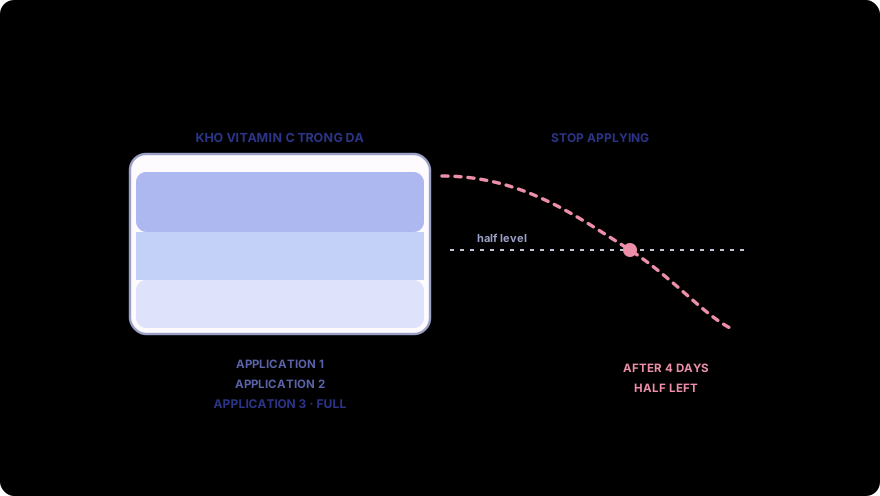
Skin vitamin C store fills after 3 uses, drains after stopping
Practical takeaway: applying consistently every day matters more than applying a lot. One very heavy application followed by three days off is not as good as applying just enough on all three days.
📖 Terms in this section
- Free radical: a molecule with a lone electron, i.e. an unpaired electron, which makes it very prone to snatching electrons from other molecules and damaging cell membranes, proteins and DNA.
- Epidermis and dermis: the epidermis is the outer part of the skin and has no blood vessels; the dermis lies beneath it and contains collagen and blood vessels.
- UVB: the shorter-wavelength band of ultraviolet rays, which causes sunburn.
- SVCT1 (sodium-dependent vitamin C transporter 1): a sodium-dependent vitamin C transport channel found mainly in the keratinocytes of the epidermis; it is the gateway that carries vitamin C from the blood into the epidermis.
- mRNA: the copy of a gene that a cell uses to make a protein. Less mRNA means the cell is making less of that protein.
- Keratinocyte: the main cell type of the epidermis.
- Saturated: the reservoir is full; applying more does not raise the amount in the tissue any further.
- Half-life: the time it takes for the amount of a substance in the tissue to fall to half.
3 · Five effects on the skin
3.1 · Fixing errors in collagen production to keep skin young longer
Skin still makes its own collagen every day. Two enzymes on that production line, prolyl 4-hydroxylase and lysyl hydroxylase, finish the collagen fibres so they are strong enough. Each of these enzymes has an iron atom at its core.
The problem is that these enzymes sometimes skip a beat. Each time they skip, the iron atom at the core switches to a state that can no longer be used, and the enzyme stops. That is an error, and the production line needs something to fix it.
Vitamin C is what fixes the enzyme's error. It returns the iron atom to its working state, and the enzyme carries on:
"Since collagen hydroxylases may catalyze occasional uncoupled reaction cycles even in the presence of the peptide substrates, the main function of ascorbate in these reactions in vivo is suggested to be that of reactivating the enzymes after such uncoupled cycles."
(Myllylä et al., Journal of Biological Chemistry, 1984, PMID 6325436)
Without vitamin C, skin still makes collagen. But every time an error occurs, the production line stops and nothing clears it.
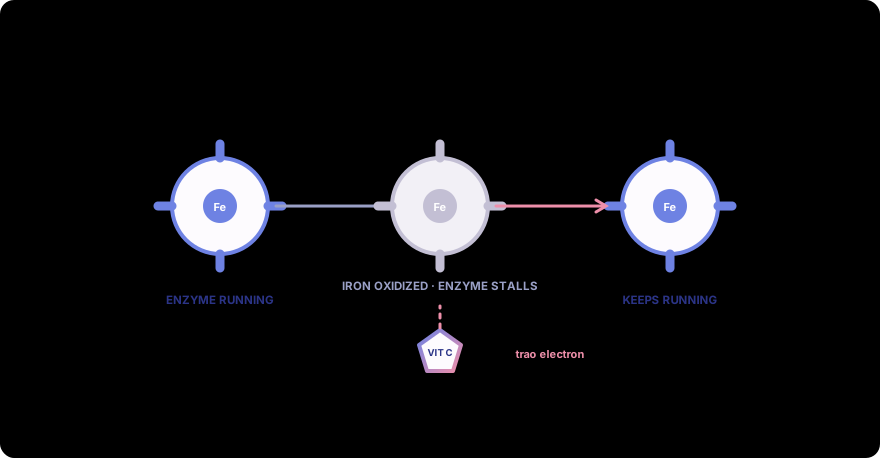
The collagen-finishing enzyme jams; vitamin C unjams it
The human evidence comes from a design that compares two sides of the same person. Postmenopausal women had vitamin C applied to the upper dorsal forearm on one side and vehicle on the opposite side. Both sides were then biopsied to measure mRNA:
"The mRNA of collagen type I and type III were increased to a similar extent by vitamin C and that of three post-translational enzymes, the carboxy- and amino-procollagen proteinases and lysyloxidase similarly increased."
(Nusgens et al., Journal of Investigative Dermatology, 2001, PMID 11407971)
"The expression of matrix metalloproteinases 1, 2, and 9 was not significantly changed, but an increased level of tissue inhibitor of matrix metalloproteinase 1 mRNA was observed without modification of tissue inhibitor of matrix metalloproteinase 2 mRNA."
(Nusgens et al., Journal of Investigative Dermatology, 2001, PMID 11407971)
Each person served as their own control, so the difference between the two sides cannot be put down to age, habits or skin type. TIMP-1 inhibits the enzymes that break down the dermal matrix. So when TIMP-1 rises at the same time as collagen, it shows that vitamin C switches on more than the building side. It also switches on the brake that keeps the dermal matrix from being destroyed.
Practical takeaway: vitamin C switches on the whole line that builds the dermal matrix, not just one link in it. That includes the brake that keeps the matrix from being broken down. This is one reason why vitamin C and retinol are the two most essential actives in a skincare routine.
📖 Terms in this section
- Collagen type I and type III: the two main types of collagen in the dermis. They form the skin's firm framework.
- Enzyme: a protein that speeds up a chemical reaction in the body without being used up itself.
- Prolyl 4-hydroxylase and lysyl hydroxylase: two enzymes that attach hydroxyl groups to the amino acids proline and lysine on the collagen chain. Without this step, collagen fibres cannot twist into durable fibres.
- Uncoupled cycle: a skipped cycle, when the enzyme uses up its raw materials without attaching a hydroxyl group, and the iron atom at its core is oxidised after that cycle.
- Vehicle: the base of a product, identical to the test product but without the active ingredient. It is used as the control.
- Biopsy: taking a small piece of skin to examine and measure in the laboratory.
- Post-translational enzymes: enzymes that finish the collagen chain after the cell has made it.
- MMP (matrix metalloproteinase) and TIMP (tissue inhibitor of matrix metalloproteinase): MMPs are enzymes that cut collagen and the dermal matrix. TIMPs inhibit MMPs and act as the brake.
3.2 · Preventing melanin pigment from forming for brighter, clearer skin, but not by inhibiting the enzyme tyrosinase as people commonly believe
Almost every popular source says that vitamin C brightens skin by inhibiting tyrosinase, the enzyme that starts pigment production. Direct measurement shows this is not true.
Melanocytes make pigment through a three-step line: tyrosine becomes DOPA, DOPA becomes dopaquinone, and dopaquinone then goes on to become melanin. Researchers measured the kinetics of purified tyrosinase in a pH 6.8 buffer at 25 °C, with vitamin C at five levels from 0 to 100 µM. Vitamin C did not change the enzyme's activity:
"Over the ranges of ascorbic acid concentration used, no direct effect on the enzyme is found."
(Ros et al., Biochemical Journal, 1993, PMID 8216233)
What vitamin C really does happens at the step after the enzyme: it reduces dopaquinone back to DOPA.
"In the light of these results it is proposed that the influence of ascorbic acid on the reaction is due to its ability to reduce the enzymically generated o-quinones."
(Ros et al., Biochemical Journal, 1993, PMID 8216233)
In other words, vitamin C does not break the pigment-making machine. It stands at the end of the line and keeps pushing the product back to the previous step. As a result, melanin forms more slowly for as long as vitamin C is present.
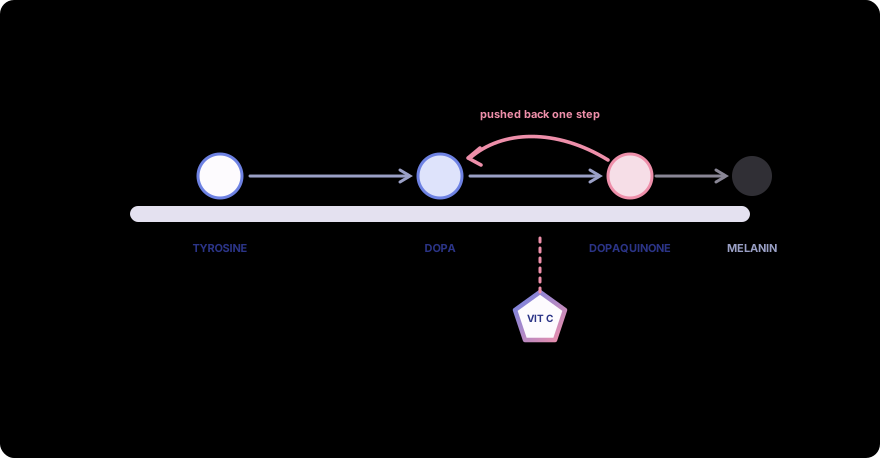
The pigment assembly line: vitamin C pushes back one step
Lesson 3 introduced a second route, which takes place inside living melanocytes. Vitamin C makes the inside of the cell more acidic, and tyrosinase runs more slowly in that acidic environment:
"These results unambiguously demonstrate that the tyrosinase activity of MCs is inhibited by VC and its derivatives through cytoplasmic acidification."
(Miao et al., Oxidative Medicine and Cellular Longevity, 2019, PMID 31214276)
The two routes complement each other and share one feature: vitamin C does not bind to tyrosinase to lock it directly. One route changes the environment so the enzyme runs more slowly. The other pushes back the product the enzyme has just made.
The human evidence comes from a randomised, double-blind, placebo-controlled trial in 29 women with melasma. On one half of the face, 3.75% magnesium ascorbyl phosphate (MAP, a phosphate derivative of vitamin C) was delivered into the skin by iontophoresis. The other half received only distilled water. Treatment was given twice a week for 12 weeks:
"Twelve weeks after iontophoresis, the colorimeter of the treated site showed a significant decrease in the L value (from 4.60 to 2.78, p = 0.002), compared to that of the control site (from 4.45 to 3.87, p = 0.142)."
Twelve weeks after iontophoresis, the colorimeter recorded that the difference in lightness between the melasma patches and normal skin on the treated side decreased significantly, from 4.60 to 2.78 (p = 0.002), while on the control side it only went from 4.45 to 3.87 (p = 0.142).
(Huh et al., Dermatology, 2003, PMID 12771472)
Practical takeaway: this effect needs the most consistency, because it only lasts while vitamin C is present in the skin.
📖 Terms in this section
- Tyrosinase: the key enzyme that starts the melanin production line.
- Melanocyte: a cell in the basal layer of the epidermis, where melanin is made.
- Tyrosine, DOPA, dopaquinone: three substances that follow one another on the pigment production line. Dopaquinone comes just before the steps that form melanin.
- Enzyme kinetics: measuring how fast an enzyme works under each condition. It is the most direct way to check whether a substance acts on an enzyme.
- Reduce: to reduce a substance is to give it electrons. Vitamin C reduces dopaquinone, meaning it gives dopaquinone electrons so that it returns to DOPA.
- Cytoplasmic acidification: making the fluid inside the cell more acidic.
- Randomised, double-blind, placebo-controlled trial: a way of running a trial so that neither the participants nor the assessors know which side has the active ingredient.
- Melasma: symmetrical brown pigment patches on the face, common in women.
- Iontophoresis: using a small electric current to push charged substances into the skin.
- p value: a p below 0.05 means the difference is unlikely to be due to chance. p = 0.142 means the change on the control side is not statistically significant.
3.3 · Boosting ceramides to help skin build a healthy lipid barrier
The outermost layer of skin holds water thanks to layers of lipids stacked between the corneocytes. The main component of these lipid layers is ceramide.
Vitamin C makes keratinocytes produce about 32% more ceramides. It does this by boosting exactly three enzymes on the ceramide synthesis line. In the experiment, cultured human keratinocytes were given 50 µg/mL vitamin C for up to 11 days and compared with cells grown under the same conditions without vitamin C. Total ceramides rose from 1,086 to 1,431 pmol per mg protein, an increase of 31.8% (p < 0.01):
"We show here that Vit C supplementation increases epidermal ceramide content via specifically increasing the enzymatic activity and expression of SPT, CerS, and SPPase."
(Kim et al., Biomolecules & Therapeutics, 2015, PMID 26535077)
What makes this result credible is that it is not a rise across the board. The same study showed that two sphingomyelinase enzymes on a neighbouring metabolic branch did not change, so vitamin C pushed exactly the branch that needed pushing. A substance that raises everything is usually just a general stimulant. A substance that raises one specific branch is one with a real mechanism.
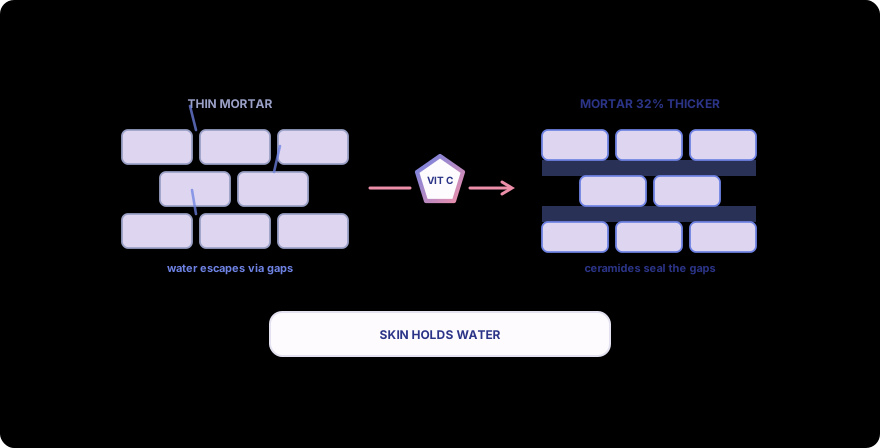
Ceramides are the mortar between corneocyte bricks
Vitamin C's role in the lipid barrier goes beyond a 32% increase. In laboratory-built models of human epidermis, a fully functional barrier lipid layer cannot form without vitamin C, and vitamin E cannot replace it:
"Although in vitamin E-supplemented medium lipogenesis was not affected, in vitamin C-supplemented medium the content of glucosylceramides and of ceramides 6 and 7 was markedly increased, both in the presence and absence of serum and irrespective the substrate used (inert or natural, populated or not with fibroblasts)."
(Ponec et al., Journal of Investigative Dermatology, 1997, PMID 9284103)
"The results indicate the key role vitamin C plays in the formation of stratum corneum barrier lipids."
(Ponec et al., Journal of Investigative Dermatology, 1997, PMID 9284103)
Practical takeaway: vitamin C does not only work deep down on collagen. It also helps build the outermost layer, which decides whether skin feels soft or dry and rough.
📖 Terms in this section
- Ceramide: the lipid that makes up most of the lipid layer between corneocytes. It keeps water from evaporating through the skin.
- SPT (serine palmitoyltransferase) and CerS (ceramide synthase): two enzymes on the line that makes new ceramides from scratch.
- SPPase (sphingosine-1-phosphate phosphatase): an enzyme that recycles raw materials to make more ceramides.
- Sphingomyelinase: an enzyme on a neighbouring branch that makes ceramides by cutting sphingomyelin. This branch does not change with vitamin C.
- pmol/mg protein: a unit measuring the amount of ceramide per milligram of cellular protein, so that samples can be compared.
- Reconstructed human epidermis: a layer of epidermis grown from human cells in the laboratory.
- Glucosylceramide: a precursor of ceramide, which cells convert into ceramide when it reaches the stratum corneum.
3.4 · Helping inflammation end at the right time so skin recovers quickly, instead of staying inflamed
Vitamin C is often called an anti-inflammatory, but the data show that it does not simply shut down inflammation.
A normal inflammatory response has two halves: an inflammatory phase that clears the damage, and a healing phase once the inflammation is over. If the inflammatory phase is not strong enough, the healing phase may not be called in, and the inflammation drags on.
When vitamin C is lacking, the immune cells that arrive at the inflamed site still work normally but cannot complete their self-ending process. Instead they die by bursting, are not cleared away, and stay in the inflamed site for up to 48 hours. The experiment used mice that cannot make their own vitamin C. The mice were made vitamin C deficient, and then inflammation was induced in the abdominal cavity:
"Peritoneal neutrophils from ascorbate-deficient animals had normal morphology and respiratory burst activity but failed to undergo spontaneous apoptosis, determined by morphology and the surface expression of phosphatidylserine. Initially, there was increased cell survival, but death eventually occurred by necrosis within 48 h."
(Vissers and Wilkie, Journal of Leukocyte Biology, 2007, PMID 17264304)
The attacking capacity of the white blood cells in this experiment barely changed: 3.05 versus 3.10 nmol superoxide per minute. The opening part of the inflammatory response still ran normally. Only the closing part failed. Restoring vitamin C reversed this.
The authors found that the missing link was HIF-1α. HIF-1α is a gene regulator controlled by iron-containing enzymes that need vitamin C to work optimally. These are the same kind of iron-containing enzymes seen in section 3.1:
"Our results suggest that in ascorbate deficiency, up-regulation of HIF-1alpha blocks neutrophil apoptosis under normoxic conditions and that this represents a novel and important function for vitamin C in inflammatory cells."
(Vissers and Wilkie, Journal of Leukocyte Biology, 2007, PMID 17264304)
At first glance it may make the inflamed area flare up, but it is exactly this that calls in the healing phase sooner.
For many years these two phases of inflammation were not well understood. So when inflammation appeared, people were often frightened and tried to shut it down with corticosteroids. That approach does a great deal of harm to the skin, because it works against the two-phase course of inflammation.
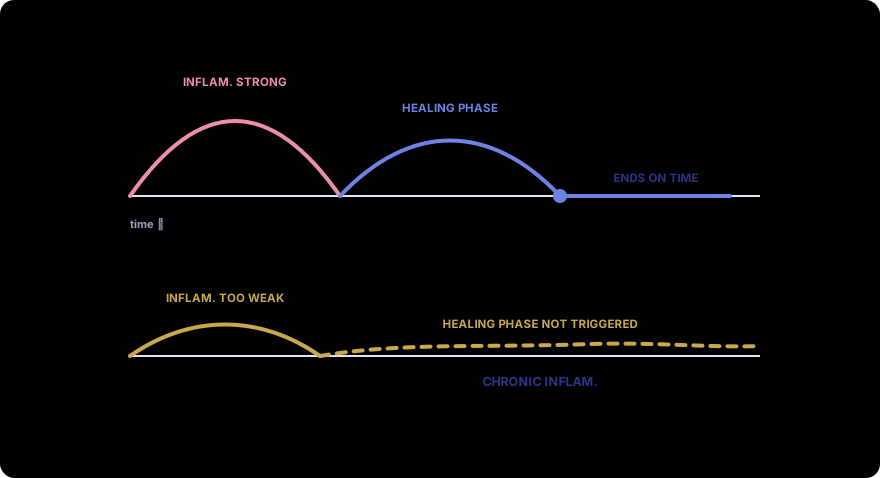
Two phases of one inflammation
Section 5.4 uses this same two-phase framework to interpret how inflammatory acne progresses when a client starts using vitamin C.
📖 Terms in this section
- Neutrophil: the immune cell that reaches the inflamed site first, to kill bacteria and clear damaged tissue.
- Respiratory burst (attacking capacity): a burst in which immune cells produce strong oxidising radicals such as superoxide to kill bacteria.
- Apoptosis (programmed cell death): a tidy form of death in which the cell shrinks and signals macrophages to come and clear it. This is how the inflammatory response ends itself.
- Necrosis: a bursting form of death in which the cell's contents spill into the surrounding tissue and prolong the inflammatory response.
- HIF-1α (hypoxia-inducible factor 1α): a gene regulator that normally rises only when oxygen is lacking. When vitamin C is lacking, it rises even when oxygen is sufficient, and stops white blood cells from undergoing programmed death.
- Corticosteroids: a group of strong anti-inflammatory drugs that suppress the inflammatory response in every phase.
3.5 · Boosting the effectiveness of sunscreen
On human skin, a vitamin C formula applied before ultraviolet exposure clearly reduced two signs of damage that can be counted under a microscope. Sunburn cells fell from 8.2 to 0.8 per millimetre of epidermis, and cells with DNA damage fell from 92.9 to 6.8. The formula in the trial contained 10% L-ascorbic acid, 0.5% ferulic acid and 2% phloretin. It was applied for four consecutive days to the backs of 10 volunteers:
"Sunburn cells are epidermal apoptotic cells resulting from extensive UV damage. CFerPhlor provided significant protection (P < 0.01) in comparison to vehicle against UV generation of sunburn cells at 5× MEDs (vehicle 8.2 ± 3.8 cells/mm skin vs. CFerPhlor 0.8 ± 0.8 cells/mm skin)."
(Oresajo et al., Journal of Cosmetic Dermatology, 2008, PMID 19146606)
Used together with sunscreen, the two work synergistically. In a study on volunteers, different skin areas received vehicle alone, SPF 25 sunscreen alone, an antioxidant mixture alone, or both together. The areas were then exposed to simulated sunlight at 1.5 times the minimal erythema dose on four consecutive days and biopsied after 72 hours. MMP-9 is an enzyme that breaks down the dermal matrix and is a marker of photoageing. For MMP-9, sunscreen alone did not reach statistical significance, and neither did the antioxidant mixture alone. Used together, they blocked the damage completely:
"Interestingly, although protection against induction of MMP-9, a marker of photoageing, did not reach significance when either SS or AOx were applied separately, there was complete protection against MMP-9 induction when these were combined."
(Wu et al., Clinical and Experimental Dermatology, 2011, PMID 20804506)
The four separate arms make it possible to separate each one's contribution, and the results show true synergy rather than a simple sum.
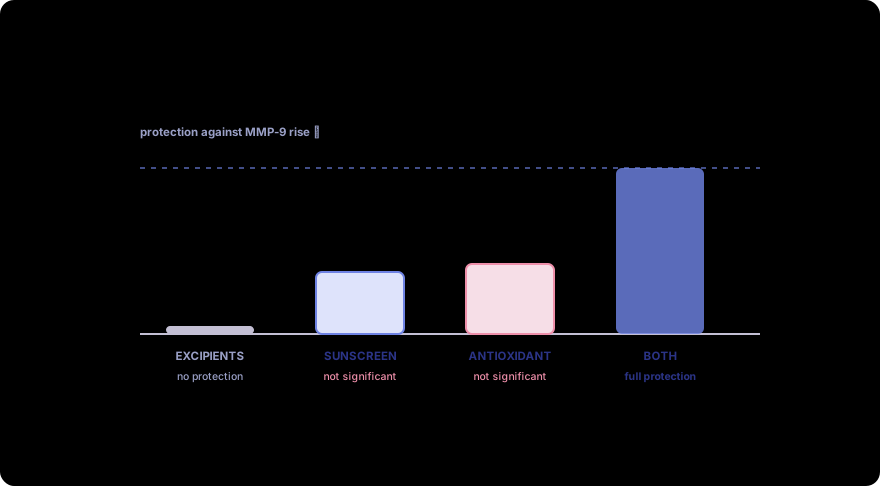
Protection against MMP-9 rise in four skin sites of the same volunteers
The reason is that the two block damage at two different levels. Sunscreen stops most of the rays right at the stratum corneum. But the rays that get through still generate free radicals in the living cell layers below, and that is exactly where the skin's vitamin C reservoir cleans up:
"UV photons that were not absorbed/scattered by the sunscreen formulations generated ROS within the viable epidermal layers."
(Hanson and Clegg, Journal of Cosmetic Science, 2003, PMID 14730375)
"The bioconversion forms an antioxidant reservoir that deactivates the ROS generated (within the strata granulosum, spinosum, and basale) by the UV photons that the sunscreens do not block in the stratum corneum."
(Hanson and Clegg, Journal of Cosmetic Science, 2003, PMID 14730375)
Practical takeaway: vitamin C increases how well sunscreen protects the skin when the two are used together. Neither can replace the other, because each blocks damage at a different layer of the skin.
📖 Terms in this section
- Sunburn cell: an epidermal cell that has undergone programmed death because of UV damage. These cells can be counted on a biopsy slide.
- DNA damage (thymine dimer): a spot where two thymine units on DNA stick together because of UV. It is a direct trace of ultraviolet light on the genes.
- MED (minimal erythema dose): the smallest UV dose that turns the skin red.
- Ferulic acid and phloretin: two plant-derived antioxidants, often paired with vitamin C in serums to keep the formula stable.
- SPF (sun protection factor): the sun protection rating, which measures how well a product blocks UVB rays.
- ROS (reactive oxygen species): a group of oxygen-containing molecules that readily cause oxidation. They include free radicals such as superoxide as well as non-radicals such as hydrogen peroxide.
- Stratum granulosum, spinosum, basale (granular, spinous and basal layers): the three living cell layers of the epidermis, beneath the stratum corneum.
4 · Concentration, stability, and how to tell whether a product is still usable
This is the most important part of the lesson, because with vitamin C, choosing the right product is harder than choosing the right concentration.
4.1 · Higher concentration does not mean more effective, and the evidence sits at lower levels than many people think
| Concentration | Context with human data |
|---|---|
| 3% | increased density of dermal papillae after 4 months |
| 5% | improved microrelief and deep furrows after 6 months, with biopsies |
| 5% phosphate form (Magnesium Ascorbyl Phosphate), combined with niacinamide 10% and hyaluronic acid 5% | improvement in melasma equivalent to hydroquinone 4% on the mMASI score after 60 days |
| 8–15% | the common range for L-ascorbic acid serums on the market |
At 3%, vitamin C increases the density of dermal papillae from the fourth week onward:
"Additionally, we determined the effect of a topical cream containing 3% vitamin C against the vehicle alone using daily applications for four months on the volar forearm of 33 women."
(Sauermann et al., BMC Dermatology, 2004, PMID 15456516)
"Topical vitamin C resulted in a significant increase of the density of dermal papillae from 4 weeks onward compared to its vehicle."
(Sauermann et al., BMC Dermatology, 2004, PMID 15456516)
At 5%, a 6-month double-blind trial on photoaged skin of the neck, chest and arms showed a clear improvement in the skin surface:
"A highly significant increase in the density of skin microrelief and a decrease of the deep furrows were demonstrated."
(Humbert et al., Experimental Dermatology, 2003, PMID 12823436)
With the 5% phosphate form in a combination formula, a double-blind trial on melasma found no difference compared with hydroquinone 4%:
"Both interventions led to a progressive improvement in mMASI, MELASQoL, and GAIS, without a difference between them on D14 and D60 (p>0.2)."
(Barbosa et al., Clinical, Cosmetic and Investigational Dermatology, 2024, PMID 39376788)
All three studies that demonstrated real changes in skin structure used concentrations of 3% and 5%. Lesson 2 noted that 20% is the absorption ceiling measured on pig skin, not a level you need to reach. The number on the label is therefore not the most important thing to look at, and section 4.2 explains why.
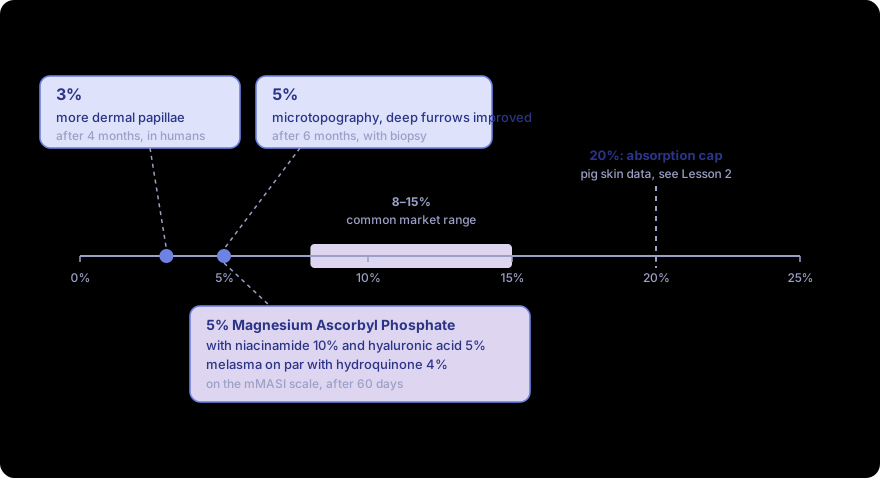
Vitamin C concentration: where human evidence is vs. what the market uses
📖 Terms in this section
- Dermal papillae: small ridges of the dermis that project up into the epidermis and contain the capillaries that nourish the skin; dermal papillae become sparser as skin ages.
- Skin microrelief: the network of fine furrows on the skin surface, measured on silicone replicas taken from the skin.
- Hydroquinone: a classic skin-lightening drug, used as the comparison standard in melasma treatment trials.
- mMASI, MELASQoL, GAIS: three scales used in melasma trials; mMASI scores the area and darkness of melasma, MELASQoL measures the impact of melasma on quality of life, and GAIS is an overall assessment of aesthetic improvement.
4.2 · Why two bottles both labelled 15% can contain very different amounts of active ingredient
Vitamin C degrades along three pathways, and all three have been measured.
Formula base: in a direct comparison, a 15% water-based formula retained about 72% of its vitamin C after two months and 65% after three months at room temperature. At the same concentration in an anhydrous base, the amounts remaining were 99.8% and 94.7%. Water is the medium in which oxidation takes place, and removing the water almost stops the reaction:
"There was a 35.24% degradation of AA in an aqueous medium after three months of storage at room temperature while the anhydrous sample maintained about 95% of the initial content."
(Martínez-Valverde et al., Cosmetics, 2022, DOI 10.3390/cosmetics9040074)
Light: in a cream base, vitamin C degrades about 70 times faster when exposed to light than when kept in the dark:
"The values of these rate constants indicate that the degradation of AH2 in the dark is about 70 times slower than those of the creams exposed to UV irradiation."
(Ahmad et al., AAPS PharmSciTech, 2011, PMID 21735345)
pH: in the same set of measurements, vitamin C was most stable at around pH 4, and raising it to pH 7 nearly tripled the rate of degradation under light:
"Ascorbic acid exhibits maximum photostability in the creams at pH 4 in all the formulations."
(Ahmad et al., AAPS PharmSciTech, 2011, PMID 21735345)
The two measurements on light and pH come from oil-in-water creams containing 2% ascorbic acid at pH 4 to 7, and they measure loss in the container, not on the skin. They describe the stability of the active ingredient in its packaging, not an L-ascorbic acid serum at pH 3 once it has been applied to the skin.
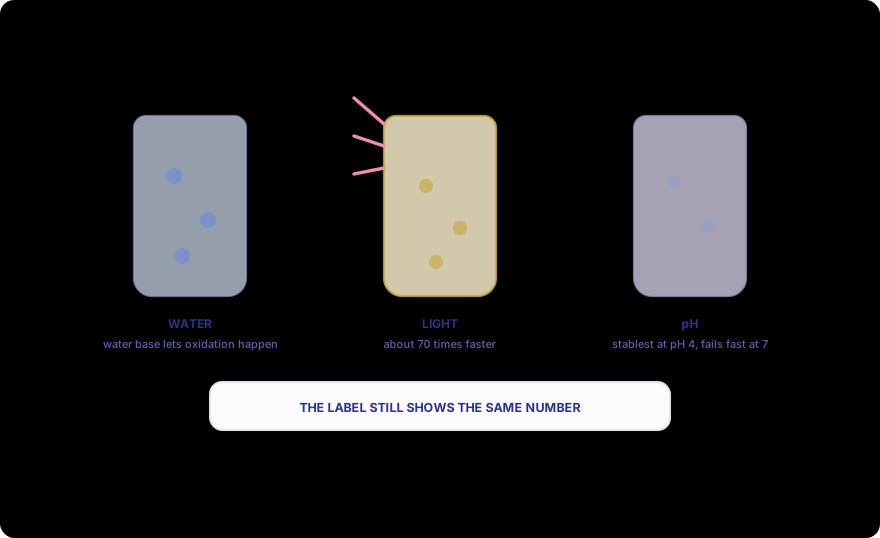
Three ways vitamin C degrades in the bottle
📖 Terms in this section
- Aqueous and anhydrous bases: an aqueous base uses water as the solvent; an anhydrous base contains no water and is usually oil, silicone or glycol.
- Oxidation: a reaction in which a substance loses electrons. For vitamin C in the bottle, the electron acceptor is oxygen in the air, and this is exactly the pathway by which it degrades.
- Rate constant: a number that tells how fast or slow a reaction proceeds; a rate constant 70 times larger means degradation 70 times faster.
4.3 · Four things worth looking at more than the percentage on the label
Putting the three degradation pathways above together gives four things worth looking at more than the percentage.
Formula base: products in an anhydrous or oil base retain the active ingredient far better than water-based ones. On the ingredient list, an anhydrous base is one without Water (Aqua).
Packaging: the bottle should be dark-coloured or opaque, with a small opening and an airtight pump. Light is the fastest-acting of the three factors.
pH, if the manufacturer discloses it: for L-ascorbic acid, a low pH is needed both for penetration into the skin and for keeping the active ingredient stable.
Derivative forms, if you need convenience: derivative forms are designed precisely for stability. Among them, Tetrahexyldecyl Ascorbate (also called Ascorbyl Tetraisopalmitate) is the form with the clearest evidence of conversion to vitamin C in the skin. VC-IP in the study below is the raw-material name of this same substance. In reconstructed human skin tissue, most of the amount recovered after 48 hours was already in the form of vitamin C:
"These results indicate that VC-IP is converted to Vitamin C at a ratio of 84% in the reconstructed skin model."
(Ochiai et al., Journal of Dermatological Science, 2006, PMID 16935471)
Practical takeaway: a 10% serum in an anhydrous base in a dark-coloured bottle is likely to deliver more active ingredient into the skin than a 20% water-based serum in a clear bottle that has been open for three months.
5 · How to use it and how to instruct your clients
5.1 · Morning is the best time
The reason isn't that skin absorbs better in the morning. It's that morning is when vitamin C has work to do. Sunscreen stops most rays at the outer layer, but the rays that get through still generate free radicals in the layers of living cells below, and as section 3.5 showed, the damage is fully blocked only when both are present. Applying in the morning means the vitamin C reservoir is already in the skin before the client steps out into the sun. Applying in the evening still works; it just loses this added boost.
5.2 · Keep it daily rather than on and off
Vitamin C works like a reservoir, not like a dose of medicine. Skin tissue needs about three consecutive applications to fill the reservoir, and after stopping, the amount in the skin gradually declines with a half-life of about four days. This means that if the client applies it for three days and then takes a week off, they're back at the starting line every time. Evening out skin tone is even stricter: the effect lasts only while vitamin C is still in the skin, so as soon as use is interrupted, the effect is lost.
5.3 · Inflamed breakouts when first starting: let the skin adjust instead of stopping
When a client sees inflamed breakouts after starting to use it, they shouldn't stop right away and conclude that vitamin C doesn't suit them. In most cases the skin simply isn't used to it yet; it's not that the two are incompatible. Help the skin adjust with the following steps, moving from the gentlest to as much as needed:
- Start at a low concentration, or start with a derivative form, which is gentler by nature, and only then switch to the original form.
- For the first two weeks, apply every other day, then move to daily use.
- Apply to completely dry skin, because damp skin lets the active penetrate faster and sting more.
- If it still stings, apply moisturizer first as a buffer layer, then apply vitamin C on top.
- Or apply it and rinse it off after a few minutes, then gradually increase the contact time week by week until it can be left on all day.
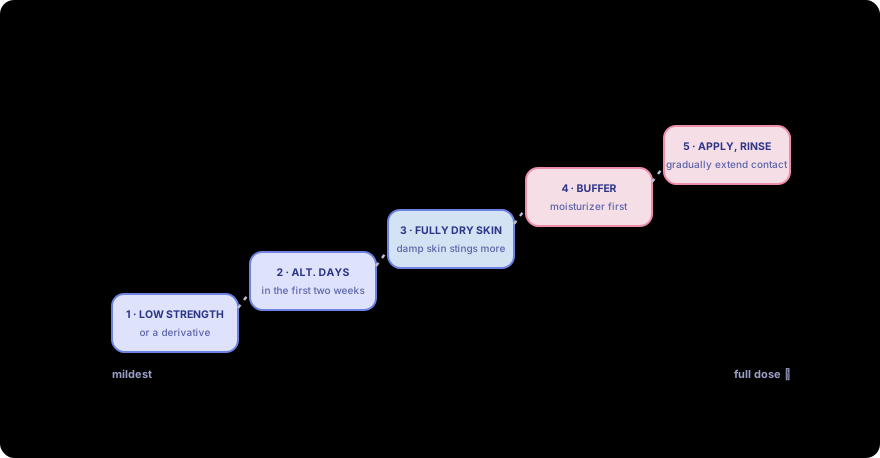
Adjustment ladder for early inflamed breakouts
5.4 · Existing inflamed acne gets worse but no new pimples appear: keep using it
If the skin already has inflamed acne and it gets worse but no new pimples form, the client can keep using it. The stronger inflammatory response helps the pimples come to a head faster. This is the two-phase framework from section 3.4: the inflammatory phase has to be strong enough before the healing phase gets called in.
The sign that tells them apart is very clear, and it has to be read from how things progress, not from a single point in time. Existing pimples flaring up, then coming to a head and flattening, is the expected course. New pimples continually appearing is a different matter, and in that case the whole routine needs to be reviewed, not just the vitamin C.
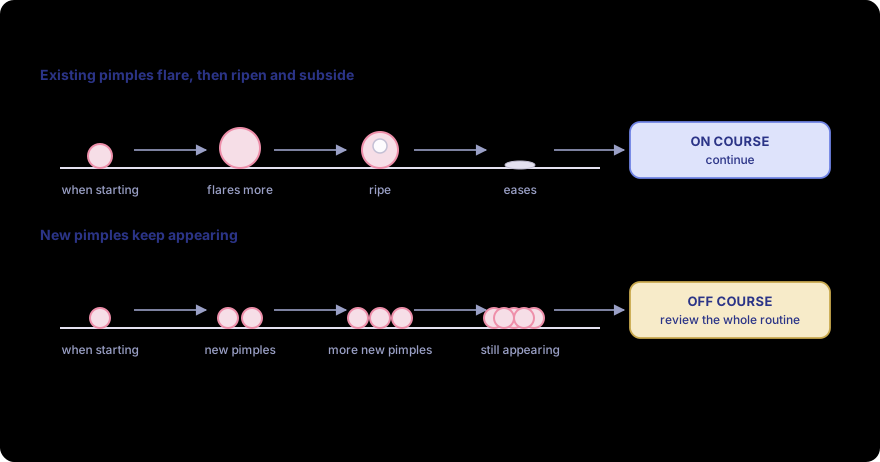
Reading early vitamin C breakouts by their course
5.5 · Sensitive skin and red skin
Sensitive skin can use vitamin C, but it's best to start at a low concentration or with a derivative form and then increase gradually. Mild stinging when first starting usually fades over the first few weeks.
For red skin, whether to use Tetrahexyldecyl Ascorbate (THD ascorbate, an oil-soluble form of vitamin C) depends on what is causing the redness. As Lesson 3 noted, the causes of skin redness are studied in depth in the course on treating corticosteroid-addicted skin, and in this course THD ascorbate is not classified among the options for treating skin redness.
6 · Combining with other actives
| Combine with | How to combine |
|---|---|
| Retinol | can be used together; these are the two foundational actives of a routine. If your skin stings easily, separate them: vitamin C in the morning and retinol in the evening |
| Vitamin E (Tocopherol) | an excellent match; vitamin C restores vitamin E that has been used up |
| Ferulic acid | can be used together; often included to stabilise the formula |
| Niacinamide | can be used together |
| Sunscreen | best used together; the two protect the skin in two different ways |
| AHA, BHA (exfoliating acids) | can be used together; if your skin is peeling or burning, space them apart |
In the Frigate range, retinol and niacinamide are in Serum Ret1, and the sunscreen is Anpo. A vitamin C product applied in the morning before Anpo puts the synergy from section 3.5 directly to use. If your skin stings easily, move Serum Ret1 to the evening.
Many people worry that low-pH products harm the skin barrier. In one study, an ascorbic acid serum at pH 3.6, applied every evening for 28 days, did not increase water evaporation through the skin and did not change microbiome diversity. No adverse events were recorded:
"After 28 days of daily application, vitamin C concentrate produced a slight, statistically nonsignificant mean reduction of − 0.45 g/m²/h in TEWL compared to baseline but a significant reduction compared to untreated areas, signifying a minor decrease in TEWL." (Janssens-Böcker et al., Dermatology and Therapy, 2025, PMID 39709312)
"For vitamin C concentrate, no statistically significant differences (p > 0.05) were detected between the two evaluation time points for the relative abundances of the genera Corynebacterium, Staphylococcus, and Pseudomonas." (Janssens-Böcker et al., Dermatology and Therapy, 2025, PMID 39709312)
"No adverse events were recorded during the study." (Janssens-Böcker et al., Dermatology and Therapy, 2025, PMID 39709312)
The skin can regulate its own surface pH. In another study, an emulsion adjusted to pH 3 with glycolic acid was applied twice a day for five weeks. It brought the skin's surface pH to about 4.7, and the skin showed no signs of abnormality:
"Although the skin pH was altered, there was no symptom of cutaneous abnormalities or inflammation." (Kim et al., International Journal of Cosmetic Science, 2009, PMID 19467032)
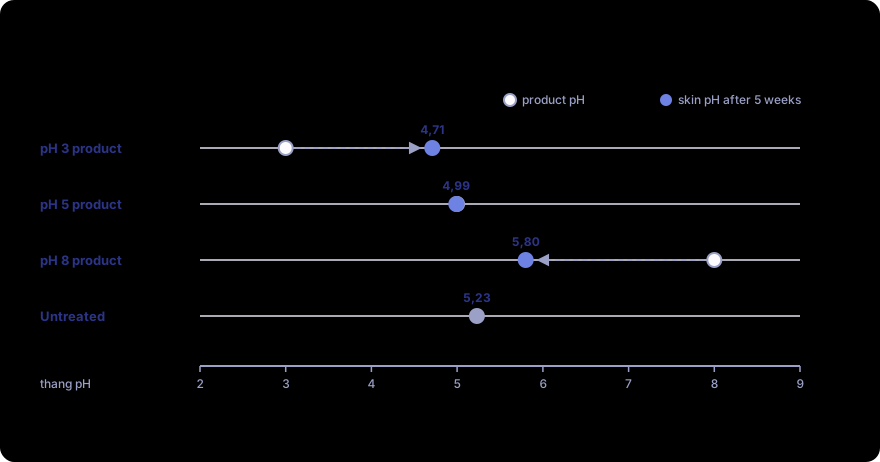
Skin pH after 5 weeks of products at 3 pH levels
📖 Terms in this section
- AHA, BHA: two groups of exfoliating acids. AHAs dissolve in water (such as glycolic acid and lactic acid). BHAs dissolve in oil (salicylic acid).
- Transepidermal water loss (TEWL): the amount of water that evaporates through the skin in a given time. A rise in TEWL is a sign that the skin barrier is weakening.
- Skin microbiome: the community of bacteria living on the skin's surface. Corynebacterium, Staphylococcus and Pseudomonas are three common bacterial genera.
- Adverse event: any unwanted reaction that occurs during a trial.
7 · Reading the evidence by tissue level
The studies in this lesson do not carry equal weight. The seven studies that anchor the main conclusions sit at three different tissue levels, and the tissue level decides how far a conclusion is allowed to reach.
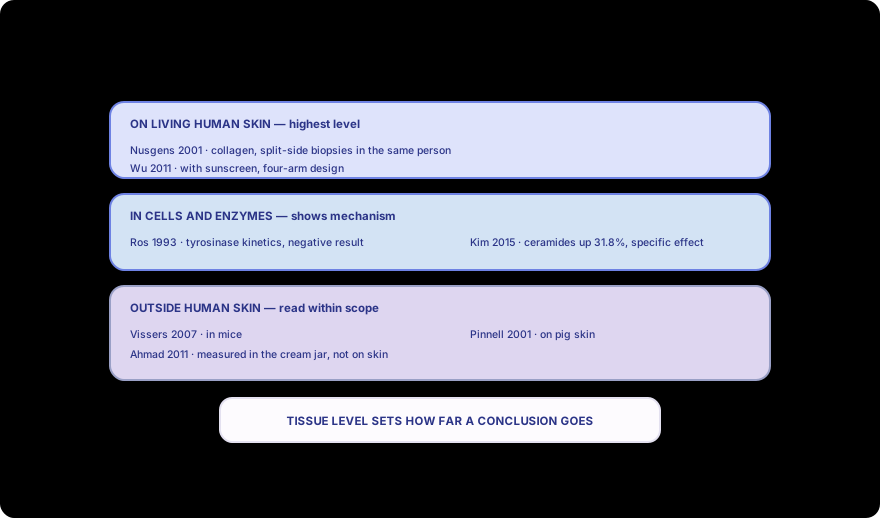
Seven anchor studies, ranked by tissue level
The two studies on living human skin are the firmest support. Nusgens 2001 compared the two forearms of the same person, and Wu 2011 separated out four arms in the same volunteers. The two studies on cells and enzymes show the mechanism. Ros 1993 measured directly on purified tyrosinase and got a negative result. Kim 2015 showed that vitamin C drives specifically the ceramide-forming branch.
The other three studies were not done on human skin, so each must be read within its own scope. Vissers 2007 was done in vitamin C-deficient mice. Pinnell 2001 was done on pig skin, so its two figures, "three applications" and "a four-day half-life", are indicative and not exact values for human skin. Ahmad 2011 measured the loss in cream jars at pH 4 to 7, not on skin.
8 · One property, two fates
There is something surprisingly tidy about this active: both its benefits and its drawbacks come from one and the same property.
Vitamin C gives up electrons very easily. In the skin, this is why it can correct the errors of the collagen-building enzymes, prevent melanin from forming, neutralise free radicals and restore vitamin E.
But in the serum bottle, that very same property makes it give up electrons to the oxygen in the air. Once it has given them up, the molecule changes into another form, dehydroascorbic acid, and if left longer its ring breaks open to form 2,3-diketogulonic acid, a substance that cannot be restored:
"The photoproducts of ascorbic acid detected in the cream formulations are dehydroascorbic acid and 2,3-diketogulonic acid." (Ahmad et al., AAPS PharmSciTech, 2011, PMID 21735345)
That is why vitamin C is the hardest active in the industry to get right. The manufacturer has to solve a problem with three constraints pulling against one another: keep the pH low enough for the active to get into the skin, reduce the water to limit oxidation, and block light so the active is not lost while it waits on the shelf. A product that solves all three of these problems well is worth more than a product that prints a high percentage on the label.
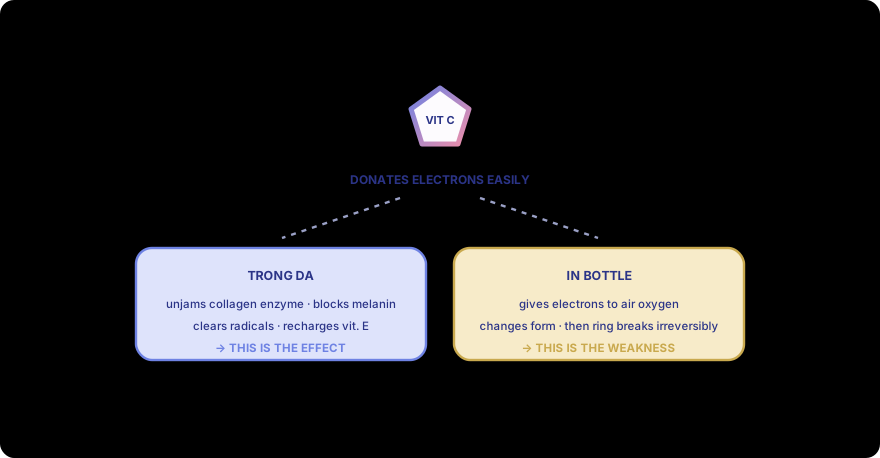
One property, two fates
Practical takeaway: when you hold a bottle of vitamin C, three questions matter more than the question of percentage: what the formula base is, whether the packaging blocks light, and how long the bottle has been open.
9 · Exercise: reading a vitamin C bottle on the shelf
Choose a vitamin C product that the spa sells or a client is using, then note down the following five things:
- Whether the form of vitamin C on the ingredient list is Ascorbic Acid or a derivative, and if it is a derivative, which one.
- Whether the ingredient list contains Water (Aqua), i.e. whether the product is water-based or anhydrous.
- Whether the packaging is clear or dark, and whether it has a wide mouth or a sealed pump.
- Whether the manufacturer states the pH, and if so, what it is.
- How long the bottle has been open, and whether the solution is still clear or has turned yellow.
From those five things, write one sentence assessing whether this bottle most likely still retains its vitamin C, based on the four factors in section 4.3. Then write one sentence advising the client on when to apply it and how often, following sections 5.1 and 5.2.
10 · One-sentence summary
Every effect of vitamin C, from building collagen, blocking melanin, building the ceramide barrier and helping inflammation end at the right time to boosting sunscreen, comes from its donating electrons, and that same property is what makes it degrade easily in the bottle, so what determines effectiveness is a product that still retains its vitamin C being applied consistently every morning, not the percentage figure on the label.
11 · Quick review
A client asks whether a vitamin C serum that has turned yellow is still usable. How should you answer? Yellowing means part of the active ingredient has oxidised. The first step of this process can still be reversed, but if it goes further the molecule breaks down into a form that cannot be restored. The colour can't tell you exactly how much of the effect is left, so treat yellowing as a sign that it's time for a new bottle.
What percentage of vitamin C is enough? The studies listed in section 4.1, which showed real changes in skin structure, used 3% and 5%. With vitamin C, the formula base and the packaging matter more than the number on the label.
Should you choose L-ascorbic acid or a derivative? The original form has the most clinical data but is the least stable. Derivatives are more stable and gentler on skin that stings easily. For clients who often forget to close the cap or leave the product in the sun, a derivative is the more practical choice.
Does vitamin C inhibit the pigment-making enzyme? Direct measurements on purified tyrosinase do not support this. Vitamin C acts at the step after the enzyme by pushing dopaquinone back to DOPA. Inside the pigment cells it also makes the environment more acidic, which slows tyrosinase down.
Does vitamin C make skin sensitive to the sun? Vitamin C does not make skin sensitive to the sun. It actually helps sunscreen protect better: sunscreen blocks the rays at the outer layer, and vitamin C clears up the free radicals that the rays getting through create in the layers below. But it does not replace sunscreen, because the two do different jobs.
Can you use vitamin C while you have inflamed acne? Yes, you can still use vitamin C while you have inflamed acne. If the existing spots flare up more but no new spots appear, the inflammatory response is running harder so the spots come to a head faster, and the client can keep using it. You only need to reconsider if new spots keep appearing.
Can it be used together with retinol? Vitamin C can be used together with retinol, and the two are the foundational actives of a skincare routine. If the client's skin stings easily, separate them: vitamin C in the morning and retinol in the evening.
A client applies vitamin C for three days, then stops for a week. Why don't they see results? The skin's store of vitamin C takes about three applications in a row to fill up. After stopping, it drops by half in about four days. So with three days on and a week off, the client goes back to the starting line every time.
📚 Sources
- Pullar JM, Carr AC, Vissers MCM. The Roles of Vitamin C in Skin Health. Nutrients. 2017. PMID 28805671. DOI 10.3390/nu9080866.
- Steiling H, Longet K, Moodycliffe A, Mansourian R, Bertschy E, Smola H, et al. Sodium-dependent vitamin C transporter isoforms in skin: Distribution, kinetics, and effect of UVB-induced oxidative stress. Free Radical Biology and Medicine. 2007. PMID 17664139. DOI 10.1016/j.freeradbiomed.2007.05.001.
- Pinnell SR, Yang H, Omar M, Monteiro-Riviere N, DeBuys HV, Walker LC, et al. Topical L-ascorbic acid: percutaneous absorption studies. Dermatologic Surgery. 2001. PMID 11207686. DOI 10.1046/j.1524-4725.2001.00264.x.
- Myllylä R, Majamaa K, Günzler V, Hanauske-Abel HM, Kivirikko KI. Ascorbate is consumed stoichiometrically in the uncoupled reactions catalyzed by prolyl 4-hydroxylase and lysyl hydroxylase. Journal of Biological Chemistry. 1984. PMID 6325436. DOI 10.1016/S0021-9258(18)91023-9.
- Nusgens BV, Humbert P, Rougier A, Colige AC, Haftek M, Lambert CA, et al. Topically applied vitamin C enhances the mRNA level of collagens I and III, their processing enzymes and tissue inhibitor of matrix metalloproteinase 1 in the human dermis. Journal of Investigative Dermatology. 2001. PMID 11407971. DOI 10.1046/j.0022-202x.2001.01362.x.
- Ros JR, Rodríguez-López JN, García-Cánovas F. Effect of L-ascorbic acid on the monophenolase activity of tyrosinase. Biochemical Journal. 1993. PMID 8216233. DOI 10.1042/bj2950309.
- Miao F, Su MY, Jiang S, Luo LF, Shi Y, Lei TC. Intramelanocytic Acidification Plays a Role in the Antimelanogenic and Antioxidative Properties of Vitamin C and Its Derivatives. Oxidative Medicine and Cellular Longevity. 2019. PMID 31214276. DOI 10.1155/2019/2084805.
- Huh CH, Seo KI, Park JY, Lim JG, Eun HC, Park KC. A randomized, double-blind, placebo-controlled trial of vitamin C iontophoresis in melasma. Dermatology. 2003. PMID 12771472. DOI 10.1159/000069943.
- Kim KP, Shin KO, Park K, Yun HJ, Mann S, Lee YM, Cho Y. Vitamin C Stimulates Epidermal Ceramide Production by Regulating Its Metabolic Enzymes. Biomolecules & Therapeutics. 2015. PMID 26535077. DOI 10.4062/biomolther.2015.044.
- Ponec M, Weerheim A, Kempenaar J, Mulder A, Gooris GS, Bouwstra J, Mommaas AM. The formation of competent barrier lipids in reconstructed human epidermis requires the presence of vitamin C. Journal of Investigative Dermatology. 1997. PMID 9284103. DOI 10.1111/1523-1747.ep12336024.
- Vissers MCM, Wilkie RP. Ascorbate deficiency results in impaired neutrophil apoptosis and clearance and is associated with up-regulation of hypoxia-inducible factor 1α. Journal of Leukocyte Biology. 2007. PMID 17264304. DOI 10.1189/jlb.0806541.
- Oresajo C, Stephens T, Hino PD, Law RM, Yatskayer M, Foltis P, et al. Protective effects of a topical antioxidant mixture containing vitamin C, ferulic acid, and phloretin against ultraviolet-induced photodamage in human skin. Journal of Cosmetic Dermatology. 2008. PMID 19146606. DOI 10.1111/j.1473-2165.2008.00408.x.
- Wu Y, Matsui MS, Chen JZ, Jin X, Shu CM, Jin GY, et al. Antioxidants add protection to a broad-spectrum sunscreen. Clinical and Experimental Dermatology. 2011. PMID 20804506. DOI 10.1111/j.1365-2230.2010.03916.x.
- Hanson KM, Clegg RM. Bioconvertible vitamin antioxidants improve sunscreen photoprotection against UV-induced reactive oxygen species. Journal of Cosmetic Science. 2003. PMID 14730375.
- Sauermann K, Jaspers S, Koop U, Wenck H. Topically applied vitamin C increases the density of dermal papillae in aged human skin. BMC Dermatology. 2004. PMID 15456516. DOI 10.1186/1471-5945-4-13.
- Humbert PG, Haftek M, Creidi P, Lapière C, Nusgens B, Richard A, et al. Topical ascorbic acid on photoaged skin. Clinical, topographical and ultrastructural evaluation: double-blind study vs. placebo. Experimental Dermatology. 2003. PMID 12823436. DOI 10.1034/j.1600-0625.2003.00008.x.
- Barbosa M, de Amorim RP, Cassiano D, Dias M, de Abreu AF, Bagatin E, et al. Efficacy and Safety of Nicotinamide 10%, Associated with Magnesium Ascorbyl Phosphate 5% and Hyaluronic Acid 5%, Compared to Hydroquinone 4% in Women with Facial Melasma. Clinical, Cosmetic and Investigational Dermatology. 2024. PMID 39376788. DOI 10.2147/CCID.S473224.
- Martínez-Valverde T, Crespo N, Suñer E. Open-Label Study to Evaluate the Efficacy of a Topical Anhydrous Formulation with 15% Pure Ascorbic Acid and Ginger as a Potent Antioxidant. Cosmetics. 2022. DOI 10.3390/cosmetics9040074.
- Ahmad I, Sheraz MA, Ahmed S, Shaikh RH, Vaid FHM, Khattak SR, Ansari SA. Photostability and interaction of ascorbic acid in cream formulations. AAPS PharmSciTech. 2011. PMID 21735345. DOI 10.1208/s12249-011-9659-1.
- Ochiai Y, Kaburagi S, Obayashi K, Ujiie N, Hashimoto S, Okano Y, et al. A new lipophilic pro-vitamin C, tetra-isopalmitoyl ascorbic acid (VC-IP), prevents UV-induced skin pigmentation through its anti-oxidative properties. Journal of Dermatological Science. 2006. PMID 16935471. DOI 10.1016/j.jdermsci.2006.07.001.
- Janssens-Böcker C, Doberenz C, Monteiro M, de Oliveira Ferreira M. Influence of Cosmetic Skincare Products with pH < 5 on the Skin Microbiome: A Randomized Clinical Evaluation. Dermatology and Therapy. 2025. PMID 39709312. DOI 10.1007/s13555-024-01321-x.
- Kim E, Kim S, Nam GW, Lee H, Moon S, Chang I. The alkaline pH-adapted skin barrier is disrupted severely by SLS-induced irritation. International Journal of Cosmetic Science. 2009. PMID 19467032. DOI 10.1111/j.1468-2494.2009.00491.x.